

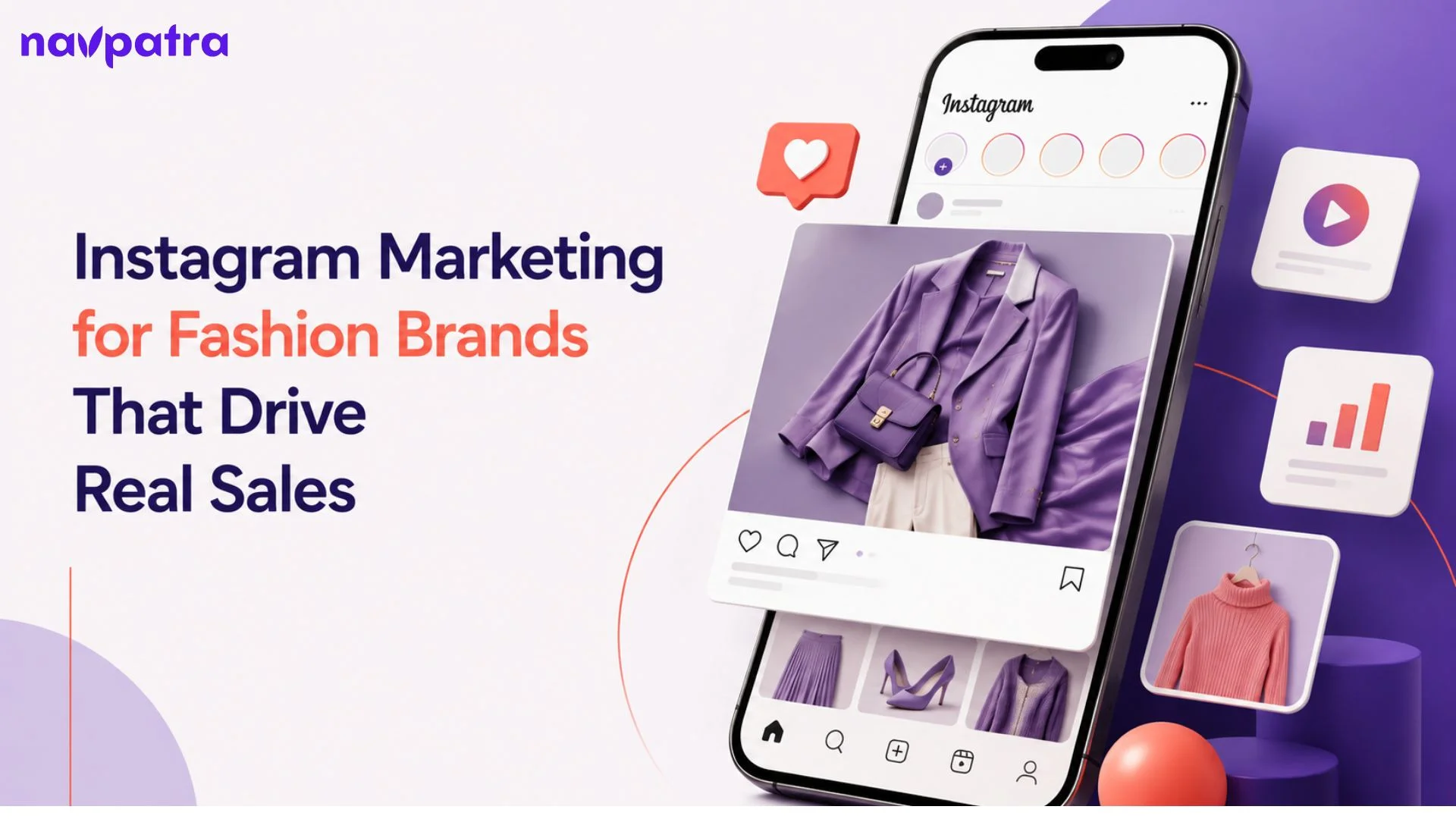
Instagram has become a major discovery channel for fashion brands in India. Customers use the platform to discover new labels, watch styling content, evaluate products, follow creators, and find trends before making a purchase.
In 2025, this behaviour became even more important. A Meta-commissioned study found that 80% of Indians discover new brands on Meta platforms, while 95% of surveyed users watched Reels daily.
Fashion and trends were also among the content categories where Reels performed particularly strongly.
But simply posting product photos is not enough. Effective instagram marketing for fashion brands requires a strategy that connects discovery with consideration and eventually with sales.
The following framework focuses on what fashion brands can practically do to build reach, engagement, trust, and revenue through Instagram.
- Instagram is a major discovery channel for fashion brands, especially through Reels, creators, and visual content.
- Effective instagram marketing for fashion brands should connect discovery, engagement, consideration, purchase, and retention.
- Fashion brands should build content around product demonstrations, styling inspiration, education, and brand storytelling.
- Reels can help brands reach new audiences through styling ideas, fit checks, transformations, fabric details, and behind-the-scenes content.
- Creator partnerships should focus on audience relevance, credibility, engagement, and conversion potential rather than follower count alone.
What Should Your Instagram Marketing Strategy Achieve?
Before creating content, define the business objective. Do you want to:
- Increase brand discovery?
- Drive qualified website traffic?
- Launch a new collection?
- Build an audience?
- Generate product demand?
- Increase repeat purchases?
- Support a festive campaign?
Your content should then support a simple funnel: Discovery → Interest → Consideration → Purchase → Retention
It prevents the common mistake of measuring every post by likes.
A Reel designed for discovery should be judged by reach, watch behaviour, shares, and profile visits. A product-focused post should be evaluated through product clicks and conversions.
That distinction is central to effective instagram marketing for fashion brands.
Build Four Strong Content Pillars
Fashion accounts often become repetitive because every post tries to sell a product. Instead, divide content into four practical pillars.
Product Demonstration
Show the product from multiple useful angles. Instead of photographing a shirt against a plain background, show its fit, fabric movement, detailing, and styling possibilities.
For example, a Reel could show the same shirt styled for work, casual outings, and evening wear.
Styling and Inspiration
Help customers decide how to wear your products. Create content around:
- Outfit combinations
- Seasonal styling
- Occasion-based looks
- Colour combinations
- Layering
- Accessories
- Wardrobe basics
It gives customers a reason to save and share your content even when they are not ready to purchase.
Insights: About 94% of the time, users form their opinion about a website based on its design, and an average user takes only 0.05 seconds to decide how they feel about a website after landing on it.
Education
Answer questions that affect buying decisions. Explain sizing, fabrics, garment care, fits, materials, and product differences.
For example, a sustainable clothing brand could explain the practical difference between organic cotton, conventional cotton, and recycled fibres instead of repeatedly saying that its products are “eco-friendly.”
Brand Community
Show what exists behind the product. Founder stories, design development, packaging, customer photographs, production processes, and behind-the-scenes content can make a fashion label more recognizable.
The objective is to make the audience understand why your brand exists, not just what it sells.
How Should Fashion Brands Use Reels?
A strong fashion Reels strategy should focus on repeatable concepts rather than chasing every trend.
In 2025, Meta reported that 92% of surveyed Indian users preferred Reels over other surveyed short-form video formats. It also reported approximately 33% higher creator engagement on Instagram Reels compared with other surveyed platforms.
That makes Reels an important acquisition format, but the content still needs a reason to exist.
Try building recurring formats such as:
- Three ways to style: One product, three outfits.
- Fit check: Show how a garment looks on different body types.
- Before and after: Transform a basic outfit with one fashion piece.
- Fabric close-up: Show texture, movement, and construction.
- Outfit formula: Explain how to recreate a specific look.
- Behind the design: Show how a collection or product was developed.
The first few seconds should establish the subject immediately. Avoid lengthy logo animations before showing the actual fashion content.
Meta has also emphasized original content in its recommendation approach, making originality more important than simply reposting content already published elsewhere.
Use Creators for Trust, Not Just Reach
Creator marketing works particularly well for fashion because people want to see products on real people. However, choosing creators solely according to follower count is a weak strategy.
A smaller creator whose audience closely matches your target customer may generate more qualified attention than a celebrity with a much larger but less relevant audience.
Evaluate: Audience relevance + content quality + engagement + credibility + conversion potential
Look at comments and audience behaviour. If followers regularly ask creators about their outfits, sizing, brands, or styling choices, that creator may have stronger commercial influence.
Meta’s 2025 festive-shopping research found that nearly half of festive shoppers followed influencers or creators, while two-thirds said brands collaborating with credible creators earned their trust. Reels were also identified as particularly influential for apparel and fashion discovery.
Give creators enough creative freedom to make the content feel natural. A creator demonstrating how they would actually wear your product can be more persuasive than a heavily scripted advertisement.
Turn Customer Content Into Social Proof
Your existing customers can become a valuable content source.
Encourage buyers to share photographs or videos featuring your products. With appropriate permission, you can reuse strong customer content across Reels, Stories, product pages, and advertisements.
Prioritize content that answers practical questions.
A customer showing how a dress fits in natural light may provide more useful information than another studio photograph. You can also create recurring formats such as:
- Customer look of the week
- How our customers styled it
- Real fit review
- Community favourites
It turns customers into participants rather than simply buyers.
Use Stories to Move Followers Toward Purchase
Stories are useful for people who already know your brand. Instead of repeatedly reposting feed content, use Stories as a sequence.
For a new collection, you could show the inspiration first, introduce individual products, run a poll, answer a sizing question, show customer reactions, and then direct interested users to the collection.
This approach makes Stories conversational.
Questions and polls also provide useful market research. If several customers ask whether a particular dress works for petite body types, that question can inform future product descriptions, sizing content, and Reels.
Make Instagram Search-Friendly
Instagram content should be understandable to both users and the platform. Use descriptive language in your profile and captions. Make it clear what you sell and whom you serve.
For example, instead of a bio containing only a motivational slogan, describe the product category and positioning.
Your content can naturally include terms related to your products, such as linen dresses, Indian ethnic wear, oversized streetwear, sustainable clothing, or women’s workwear, when relevant.
Do not stuff captions with keywords. Write for humans first. A clear profile also helps visitors decide quickly whether your brand is relevant to them.
Connect Instagram With Your Ecommerce Store
Discovery alone does not generate revenue. The transition from content to shopping should be simple. If a Reel promotes a collection of summer dresses, send users to that collection rather than the homepage.
If a creator demonstrates one particular product, direct interested users to that product whenever the available setup allows it.
The landing page should match the content’s promise.
If your Reel says “Three dresses under ₹2,000,” the destination should make those three products easy to find. The alignment reduces friction between inspiration and purchase.
Build a Practical Content Calendar
Consistency is easier when content production is planned around formats. A fashion brand could start with a monthly structure such as:
| Content type | Primary purpose |
|---|---|
| Reels | Discovery and reach |
| Styling carousels | Saves and consideration |
| Product content | Product interest |
| Stories | Interaction and conversion |
| Creator content | Trust and discovery |
| Customer content | Social proof |
Do not interpret this as a requirement to publish a fixed number of posts every week.
Your production capacity matters.
Five strong pieces of content that answer real customer needs are more valuable than fifteen repetitive posts created only to maintain frequency.
Insights: A well-designed website can significantly increase engagement, with users spending up to 84% more time on your site, while also driving up to a 132% year-over-year growth in online revenue.
Measure Instagram Growth Beyond Followers
Follower count can provide context, but it should not be your main success metric. Track metrics according to the objective.
- For discovery content, monitor reach, watch behaviour, shares, and profile visits.
- For consideration content, look at saves, comments, product interactions, and website visits.
- For conversion campaigns, monitor clicks, add-to-cart actions, purchases, revenue, and return on ad spend where applicable.
Compare formats over time.
If styling Reels consistently generate qualified traffic while polished product images generate little interaction, shift production toward styling content.
Meta’s 2025 research also showed that Reels can influence both brand discovery and commercial outcomes, reinforcing the need to evaluate video as more than an awareness format.
Common Instagram Mistakes Fashion Brands Should Avoid
Several mistakes can limit growth even when the content looks professional.
- Posting only product images: Your audience needs inspiration, education, and entertainment too.
- Chasing every trend: A viral format is useless if it attracts an irrelevant audience.
- Choosing creators by followers alone: Relevance and credibility matter more than raw audience size.
- Using excessive promotional content: Constant discounts can weaken brand positioning.
- Ignoring comments: Customer questions reveal objections and content opportunities.
- Sending every visitor to the homepage: Match landing pages with the content that generated the visit.
- Measuring only likes: Likes do not tell you whether content generated qualified demand.
The strongest instagram marketing for fashion brands strategies treat these mistakes as measurement and positioning problems, not simply posting problems.
Insights: On average, it takes about 2.6 seconds for a user’s eyes to focus on the most important areas of a web page.
The Final Thoughts
A successful Instagram strategy for a fashion brand combines visual storytelling, useful information, creator credibility, customer participation, and measurable ecommerce outcomes.
Reels should help people discover your brand. Styling and educational content should give them reasons to stay. Creators and customers should provide social proof. Stories should strengthen relationships and move interested followers toward action.
India’s social-commerce environment makes this especially relevant. Meta’s 2025 research showed that social media is already deeply embedded in product discovery, while Reels has become a major format for fashion and trend content.
The most effective instagram marketing for fashion brands is therefore not about publishing more content. It is about publishing more relevant content, understanding what each format is supposed to achieve, and connecting attention to a frictionless shopping journey.