

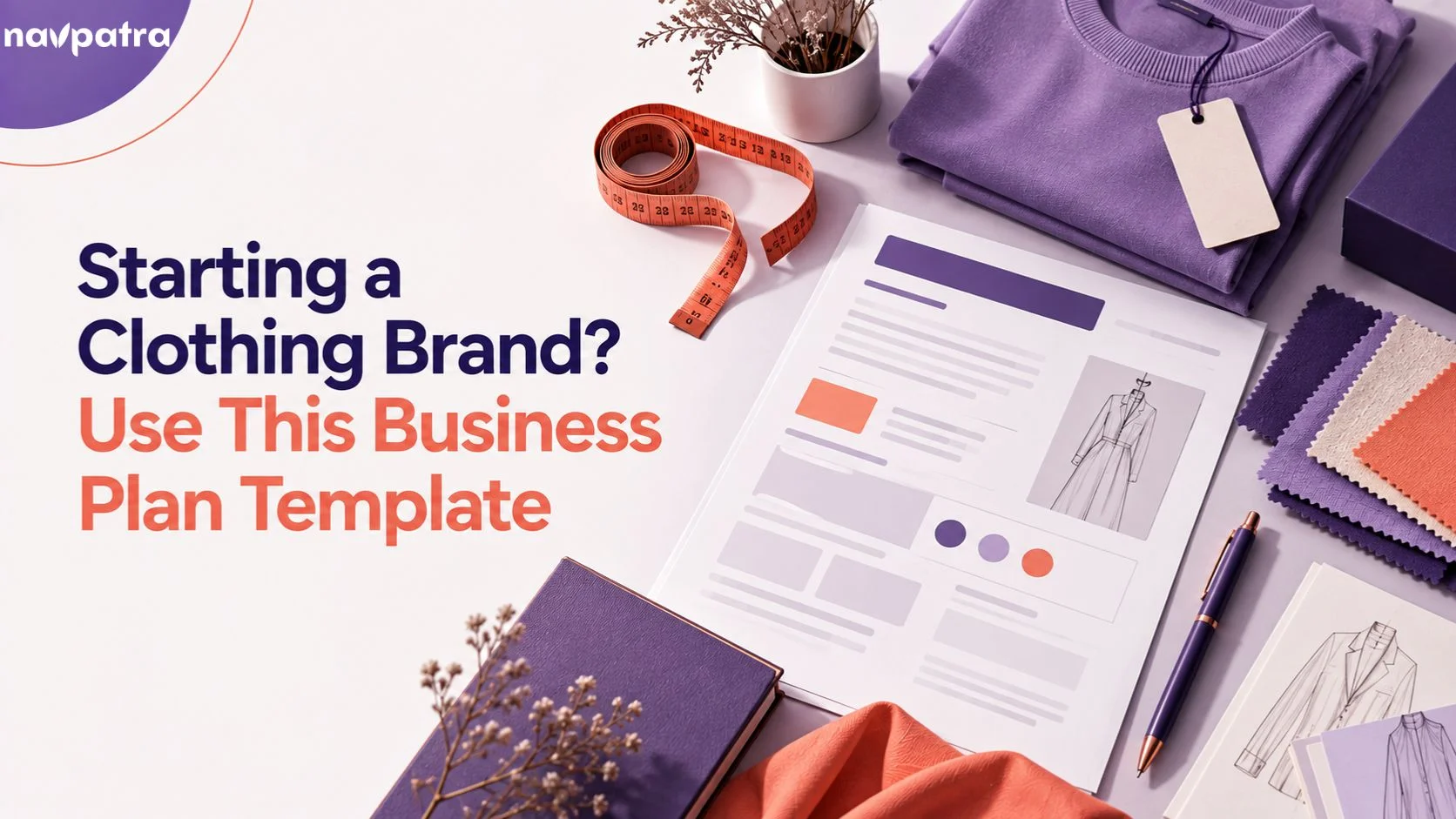
Starting a clothing brand takes more than designing attractive clothes. You need to understand your target customers, choose the right products, find reliable suppliers, set profitable prices, and build a strategy to reach buyers.
This is where a clothing brand business plan becomes useful. It turns your fashion idea into a practical roadmap. It also helps you understand how much money you need, where your revenue will come from, and what you need to do before launch.
You do not need a complicated business document. A well-structured apparel business plan can give you enough clarity to start small, test your idea, and make better decisions as your brand grows.
Here is a practical template you can follow.
Key Takeaways
- A clothing brand business plan turns your fashion idea into a clear and practical roadmap.
- Define your niche, target customer, brand positioning, and USP before developing products.
- Research competitors to identify market gaps and customer needs.
- Start with a focused product collection instead of launching too many products.
- Choose suppliers based on quality, reliability, MOQ, production time, and cost.
- Set prices after calculating production, shipping, packaging, marketing, and operating costs.
- Select sales channels that match your target audience and available resources.
- Build a marketing strategy using social media, SEO, creators, email, WhatsApp, and paid advertising.
- Invest in an ecommerce website that provides clear product information, sizing, reviews, & shipping details.
What Is a Clothing Brand Business Plan?
A clothing brand business plan explains how you will start, operate, market, and grow your fashion business. The U.S. Small Business Administration describes a business plan as a roadmap for structuring, running, and growing a business.
For a clothing brand, your plan should connect the creative and commercial sides of the business. It should answer questions such as:
- What will you sell?
- Who will buy your products?
- What makes your brand different?
- How will you source or manufacture your products?
- How much will your products cost?
- What will you charge customers?
- Where will you sell?
- How will customers discover your brand?
- How much money do you need to launch?
- What sales do you need to reach your financial goals?
You can start with a simple plan and make it more detailed as your business develops.
Define Your Clothing Brand Concept
Start with the foundation of your fashion startup plan. Explain what your brand will sell and which market you want to serve. Your niche could include streetwear, ethnicwear, sustainable fashion, modest clothing, activewear, workwear, occasionwear, or everyday fashion.
Avoid trying to appeal to everyone.
For example, “fashionable clothing for everyone” gives you little direction. Instead, you could position your brand around affordable contemporary ethnicwear for young Indian women.
It immediately gives you a clearer audience and product direction. Your brand concept should define:
- Product category
- Target customer
- Price segment
- Brand personality
- Unique selling proposition
- Customer problem or need
- Long-term brand vision
Your positioning will influence almost every other business decision. It can affect your designs, photography, website, packaging, social media content, advertising, and even the suppliers you choose.
Research Your Target Customer
Your clothing brand needs a specific customer profile. Do not assume that you know what your audience wants. Research them before investing heavily in products.
Look at their age, location, income, lifestyle, shopping habits, preferred styles, and spending behaviour. Also investigate their problems.
For example, suppose you want to launch a women’s workwear brand. Your potential customers may want stylish clothes that work for both office and evening settings. They may also care about breathable fabrics, comfortable fits, easy maintenance, and reliable sizing.
These insights can influence your product strategy.
Build an Ideal Customer Profile
Your customer profile can include:
- Age range
- Location
- Occupation
- Income level
- Fashion preferences
- Shopping frequency
- Preferred price range
- Social media platforms
- Common purchase concerns
- Reasons for choosing competing brands
The more clearly you understand your customer, the easier it becomes to create relevant products and marketing campaigns.
Analyse Your Competitors
Competitor research should form an important part of your apparel business plan. Identify brands that target similar customers. Study their products, prices, website experience, social media content, promotions, reviews, shipping policies, and return processes.
Do not only look for what competitors do well. Look for what customers complain about.
You may discover repeated complaints about poor sizing information, limited sizes, slow delivery, weak customer service, poor fabric quality, or complicated returns.
These gaps can reveal opportunities for your brand.
Your goal is not to copy another clothing company. Your goal is to understand the market and find a reason for customers to choose your brand.
Insights: About 94% of the time, users form their opinion about a website based on its design, and an average user takes only 0.05 seconds to decide how they feel about a website after landing on it.
Decide What You Will Sell
Now define your initial product collection. You do not need a huge catalogue when you are starting. A focused collection can help you manage inventory and understand customer demand more easily. For every product, define:
- Product category
- Design
- Fabric
- Available sizes
- Colours
- Production cost
- Selling price
- Minimum order quantity
- Expected profit margin
For example, a new streetwear brand could begin with oversized T-shirts, hoodies, and relaxed-fit trousers instead of launching 50 different products.
It makes easier to test your concept.
Once you identify your strongest products, you can expand the collection based on actual customer demand.
Choose Your Production Model
Your fashion startup plan should explain how you will source your products You have several options.
You can manufacture your own designs, work with a private-label manufacturer, purchase wholesale products, use print-on-demand, or work with local artisans and suppliers.
Each model comes with different costs and operational requirements. Before choosing a supplier, research:
- Minimum order quantity
- Sample costs
- Production timelines
- Fabric quality
- Customisation options
- Quality control
- Payment terms
- Packaging requirements
- Shipping arrangements
Never choose a supplier based only on the lowest quotation. Order samples first. Check the fabric, stitching, measurements, colour, finishing, labels, and fit.
A slightly higher production cost can be worthwhile if it gives you consistent quality and fewer customer complaints.
Create Your Pricing Strategy
Pricing is one of the most important parts of your business plan. Do not calculate your selling price from manufacturing cost alone. Consider packaging, shipping, payment processing, returns, marketing, website expenses, and other operating costs.
Shopify’s pricing guidance recommends considering costs, competitor pricing, and customer willingness to pay when developing a pricing strategy.
For example, imagine a product costs ₹600 to manufacture.
You might spend another ₹70 on packaging, ₹100 on shipping, and ₹80 on payment and other direct costs.
That puts your direct cost at approximately ₹850.
If you sell the product for ₹1,499, you have ₹649 remaining before other business expenses.
This does not automatically make ₹1,499 the correct price. Your final price should also reflect your positioning, customer expectations, competitor pricing, product quality, and required margin.
Plan Your Sales Channels
Decide where customers will purchase your products. A D2C clothing brand may use its ecommerce website as the primary sales channel and use Instagram, Google, email, WhatsApp, and influencer marketing to attract customers. You can also explore:
- Online marketplaces
- Pop-up stores
- Fashion exhibitions
- Boutique partnerships
- Wholesale
- Physical retail
You do not need to launch on every channel.
Start with the channels that fit your audience and resources. Then measure which ones generate traffic, sales, repeat customers, and sustainable returns.
Build Your Marketing Strategy
A good product does not automatically create demand. Your marketing strategy should explain how you will introduce the brand, attract potential customers, convert them into buyers, and encourage repeat purchases.
For a clothing brand, your strategy could include social media, creator partnerships, SEO, paid advertising, email marketing, and WhatsApp.
- Use Social Media to Build Demand: Fashion is highly visual, so social media can help you demonstrate products rather than simply describe them. Create styling videos, product demonstrations, behind-the-scenes content, customer-generated content, collection launches, and educational fashion content.
- Work With Relevant Creators: Influencer marketing can help introduce your products to an established audience. Do not choose creators only because they have large follower counts. Look at audience relevance, engagement, content quality, and whether their followers match your target customer.
- Build Organic Search Visibility: SEO can help your clothing brand reach customers who are actively searching for products or fashion information. Optimise product pages and create useful content around relevant searches.
- Use Paid Advertising Carefully: Paid advertising can accelerate customer acquisition, but you should test campaigns instead of spending your entire budget immediately. Start with controlled experiments. Track your cost per acquisition, conversion rate, average order value, and return on advertising spend.
Plan Your Ecommerce Website
If you plan to sell online, your website should be part of your business plan from the beginning. A fashion ecommerce website needs to do more than look attractive.
Customers need enough information to feel confident about purchasing clothing without seeing it physically. Focus on:
- High-quality product photography
- Detailed product descriptions
- Accurate size guides
- Clear colour and size selection
- Customer reviews
- Shipping information
- Return and exchange policies
- Mobile-friendly navigation
- Simple checkout
- Easy customer support
Your website should also communicate your brand identity consistently. Photography, typography, colours, product presentation, and copy should all support your positioning.
Calculate Your Startup Costs
Your startup budget should include more than inventory. Consider the cost of:
- Product development
- Samples
- Initial inventory
- Branding
- Labels and packaging
- Website development
- Product photography
- Video content
- Marketing
- Influencer campaigns
- Shipping and fulfilment
- Software
- Storage
- Business operations
- Working capital
Current clothing-business guidance also recommends considering both initial startup expenses and ongoing operating costs when planning a clothing business.
Do not spend your entire budget before launch.
Keep some working capital available. You may need it to restock successful products, handle returns, test new marketing campaigns, or cover unexpected expenses.
Insights: A well-designed website can significantly increase engagement, with users spending up to 84% more time on your site, while also driving up to a 132% year-over-year growth in online revenue.
Set Financial and Sales Goals
Your clothing brand business plan should contain measurable goals. Instead of writing “I want to grow my brand,” create specific targets. You could track:
- Monthly orders
- Average order value
- Monthly revenue
- Gross margin
- Customer acquisition cost
- Website conversion rate
- Repeat purchase rate
- Return rate
- Inventory turnover
For example, if your average order value is ₹1,500 and your monthly revenue target is ₹3 lakh, you need approximately 200 orders to reach that target.
Now you can work backwards.
How much website traffic do you need? What conversion rate do you need? How much inventory should you maintain? What marketing budget can support your target?
It makes your financial plan actionable.
Create a Launch Timeline
Turn your business plan into a practical schedule.
- Weeks 1-2: Research your customers, competitors, products, and suppliers.
- Weeks 3-4: Finalise designs, samples, production, and pricing.
- Weeks 5-6: Complete branding, photography, packaging, and website development.
- Weeks 7-8: Prepare social media content, creator campaigns, email marketing, and launch promotions.
- Launch: Release your collection and track sales, customer feedback, product performance, and marketing results.
After launch, use your data to improve the plan.
Clothing Brand Business Plan Template
You can turn this framework into a working document using the following sections:
- Executive Summary: Explain your brand, products, target market, and main objectives.
- Brand Strategy: Define your niche, positioning, USP, mission, and price segment.
- Target Market: Describe your ideal customer, shopping behaviour, needs, and pain points.
- Competitor Analysis: Identify competing brands and potential market gaps.
- Product Strategy: List your products, materials, sizes, colours, costs, prices, and margins.
- Production Plan: Document your suppliers, MOQs, production timelines, quality standards, and fulfilment process.
- Marketing Plan: Explain your social media, SEO, influencer, advertising, email, and WhatsApp strategies.
- Sales Plan: Identify your website, marketplaces, retail, wholesale, or other sales channels.
- Financial Plan: Calculate startup costs, ongoing expenses, revenue targets, margins, and working capital.
- Launch Plan: Set deadlines for product development, branding, website development, content, marketing, and launch.
Insights: On average, it takes about 2.6 seconds for a user’s eyes to focus on the most important areas of a web page.
Final Thoughts
A clothing brand business plan gives you a structured path from an idea to a functioning fashion business.
Start with your customer. Understand the market before investing in inventory. Build products around a clear need. Research suppliers carefully. Calculate your complete costs before setting prices. Choose sales channels that match your audience. Then build a marketing strategy that can consistently bring customers to your brand.
Your first plan does not need to be perfect.
Treat it as a working document. Update it when your sales data, customer feedback, product performance, or costs reveal something new.
That approach turns a basic fashion startup plan into a practical roadmap for building and growing a clothing brand.