

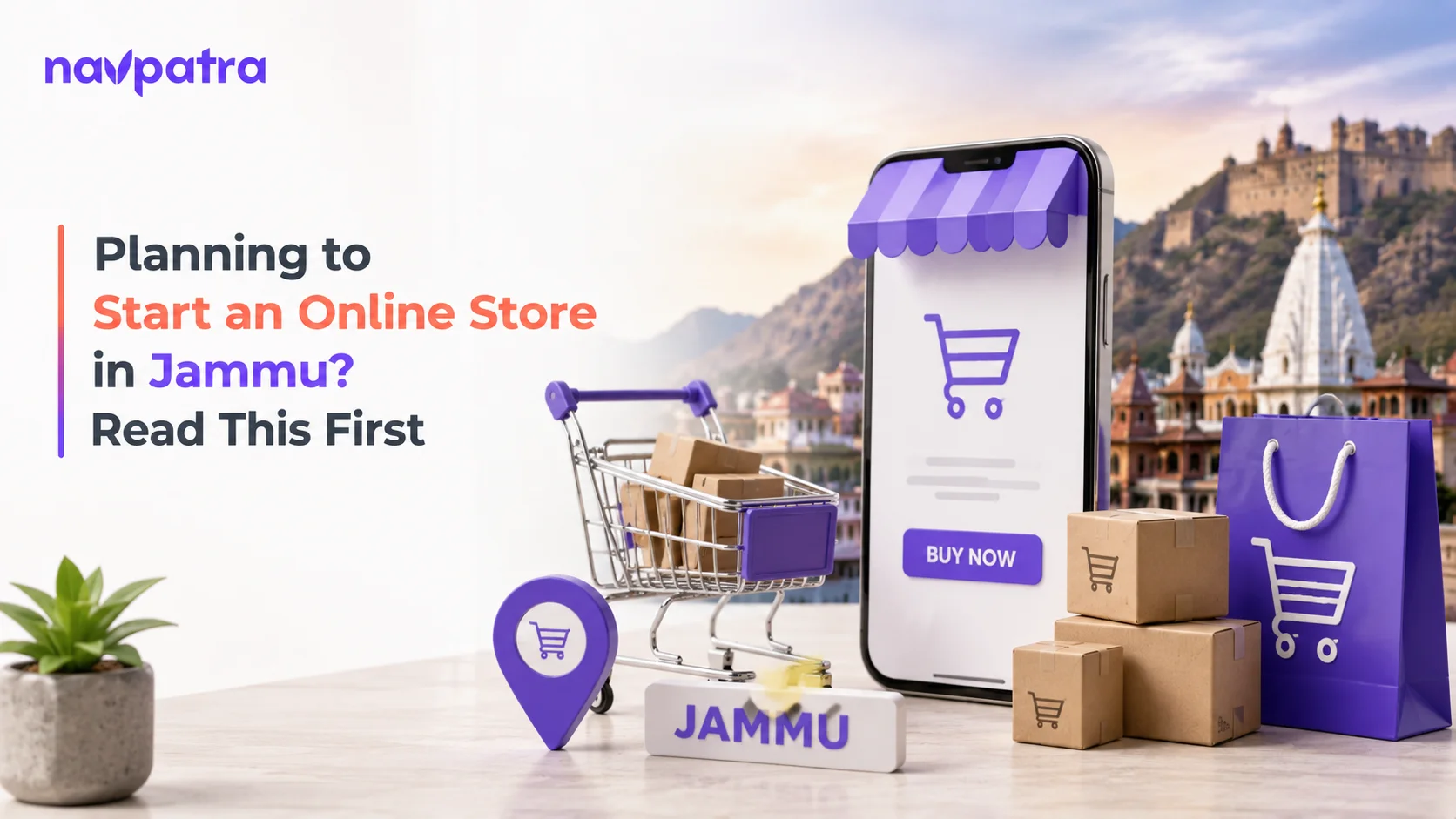
Planning to start an online store in Jammu? With rising internet adoption, expanding 5G connectivity, and increasing demand for regional products, the city offers excellent opportunities for eCommerce entrepreneurs.
Businesses selling Dogra handicrafts, dry fruits, fashion, electronics, and local specialties can now reach customers across India without relying solely on physical stores.
However, success requires more than launching a website. You need the right business model, a reliable eCommerce platform, secure payment gateways, efficient shipping partners, and compliance with applicable tax and business regulations.
Understanding Jammu’s logistics, seasonal tourist demand, and local customer preferences is equally important. A strong digital marketing strategy that combines SEO, social media, paid advertising, and local branding can help attract consistent traffic and sales.
Whether you are a retailer, manufacturer, or startup founder, this step-by-step guide will help you plan, launch, and grow a successful online store in Jammu while avoiding common mistakes that can slow your business growth.
Key Takeaway
Launching in Jammu isn’t just about a website. Success depends on market research, local sourcing, UT-specific compliance, and technology stacks tailored for regional consumer patterns.
Local advantage matters. Businesses leveraging Jammu’s industrial hubs in Bari Brahmana and strategic gateway location reduce shipping costs while improving delivery speed across North India.
Professional ecommerce development is critical. Your store must be fast-loading and mobile-optimized for 5G users, ensuring high conversion rates despite Jammu’s unique geographical connectivity challenges.
Payments and COD readiness are deal-breakers. Brands offering seamless UPI, transparent shipping, and reliable delivery to hilly terrains consistently outperform competitors in the J&K region.
Marketing must be culturally resonant. Local SEO, geo-targeted ads for Jammu sectors, and regional influencer collaborations deliver higher ROI than broad, generic national digital campaigns.
How to Launch an Online Store in Jammu? A Complete Roadmap
Launching a digital business in Jammu requires a systematic approach that accounts for the region’s geography and consumer behavior. The process involves identifying a niche that scales, securing legal permits, and setting up a robust delivery network.
Below is a quick reference table for your launch plan:
| Step | Phase | Action Item | Key Jammu Insight |
|---|---|---|---|
| 1 | Market Research | Identify Target Audience | Focus on residents in Gandhi Nagar/Channi or students at Jammu University. |
| 2 | Sourcing | Product Procurement | Utilize industrial hubs in Bari Brahmana and Samba or Raghunath Bazar for trading. |
| 3 | Legal | Business Registration | Secure GSTIN and J&K Shop & Establishment registration. |
| 4 | Development | Platform Selection | Ensure heavy mobile optimization for users across the UT. |
| 5 | Branding | Visual Identity | Use local heritage motifs or "Made in J&K" trust signals for authenticity. |
| 6 | Operations | Logistics Setup | Partner with aggregators that have strong reach in hilly terrains and North India. |
| 7 | Marketing | Traffic Generation | Use Local SEO and geo-targeted ads for sectors like Trikuta Nagar and Sainik Colony. |
| 8 | Analysis | Optimization | Analyze delivery success rates in remote areas to reduce RTO (Return to Origin) |
1. Find Your Target Audience in Jammu
Jammu’s demographics are split into three distinct segments. Your product must cater to at least one:
The Resident Consumer: People in developed sectors like Gandhi Nagar, Trikuta Nagar, and Channi Himmat who seek convenience, global fashion, and premium home services.
The Pilgrim/Tourist Crowd: Millions visit Vaishno Devi annually. They represent a massive market for authentic walnuts, saffron, copperware, and spiritual merchandise.
The Pan-India Buyer: People in Delhi, Mumbai, or Bangalore looking for “Authentic Jammu/Kashmiri” products.
Actionable Tip: If you are selling specialized items like Kalaadi (local cheese) or Pashmina, your target audience isn’t just Jammu; it’s the high-income households across Indian metros.
2. Source Your Products Locally
Jammu offers a major advantage: proximity to high-quality raw materials and industrial hubs.
Industrial Hubs: Bari Brahmana, Samba, and Digiana are massive industrial areas for plastics, pharmaceuticals, and textiles.
Traditional Markets: Raghunath Bazar and Kanak Mandi are the go-to places for wholesale dry fruits, spices, and traditional Dogra jewelry.
Artisanal Sourcing: Connect with local weavers and woodcarvers to offer unique, non-mass-produced items that command higher margins.
3. Register Your Business (Legal Compliance)
To operate legally in Jammu, you must adhere to Indian laws and Jammu state regulations. This builds trust with customers and ensures you don’t face legal hurdles later.

Essential Registrations
- GST Registration: This is non-negotiable for online sellers in India. Even if your turnover is below the threshold, selling interstate or through marketplaces usually requires a GSTIN.
- Udyam Registration (MSME): Highly recommended for small businesses. It opens doors to government subsidies and easier bank loans.
- Shop and Establishment Act: You may need to register your office or warehouse with the Jammu Labour Department, even if you are operating from home.
- Current Bank Account: Open a current account in any major bank. Most banks in Jammu (HDFC, ICICI, SBI) have specialized “Startup” branches in that understand ecommerce needs.
Insights: Ecommerce represents about 20.5% of total global retail sales today, reflecting steady growth from roughly 19.9% in 2024.
4. How to Build Ecommerce in Jammu with the Right Tech Stack?
Choosing the right platform is the foundation of your business. You generally have two paths:
- Path A: SaaS Platforms (Shopify/Wix): These are subscription-based. You pay a monthly fee, and they handle the hosting and security. If you are a first-time founder, it is important to evaluate whether Shopify is good for small business owners in terms of cost, scalability, and long-term flexibility.
- Path B: Custom or Open Source (WooCommerce/Magento): This gives you full ownership. You buy your own hosting and domain. It is flexible and often cheaper in the long run for scaling.
When deciding how to build ecommerce in Jammu, you must consider the local infrastructure. You need a site that loads fast on mobile networks (4G/5G) and integrates seamlessly with Indian payment gateways.
Why You Might Need Expert Help? While DIY tools exist, creating a professional, conversion-optimized store often requires technical expertise. This is where a dedicated agency like Navpatra becomes an asset.
An experienced team can help integrate specific features like “Check COD Availability by Pincode”, which is a crucial feature for Indian shoppers, and ensure your site is mobile-optimized for the on-the-go Jammu consumer.
5. Design Your Brand Identity
In Jammu, “Purity” and “Trust” are the biggest selling points.
Visuals: Use high-quality photography. If you sell local products, use backdrops of the Shivalik hills or traditional Dogra architecture to emphasize authenticity.
Storytelling: Share the story of the artisan or the origin of the product (e.g., “Sourced directly from the orchards of Kishtwar”).
6. Set Up Payments and Logistics
Payment and delivery are the two biggest hurdles in the region.
Payments: Integrate Razorpay or Cashfree to accept UPI (PhonePe/GPay), which is now ubiquitous in Jammu.
The COD Factor: Cash on Delivery remains king in J&K. Ensure your logistics partner handles COD remittance efficiently.
Logistics: While major players like Delhivery and BlueDart operate in Jammu, shipping to remote areas like Doda or Rajouri requires specific courier partners with a strong local network. Use an aggregator like Shiprocket to compare prices.
Insights: The worldwide ecommerce market is projected to reach approximately $6.88 trillion by the end of 2026.
7. Market Your Products in Jammu

Once your store is live, visibility becomes the real bottleneck to growth. Customers do not “discover” products accidentally; they search with intent, scroll through targeted feeds, and trust familiar local voices. That is why marketing in Jammu must be hyper-local, data-driven, and conversion-focused.
The goal is not just to bring traffic to your website, but to attract the right audience: people nearby, ready to buy, and already aligned with your product category.
The strategies below focus on capturing high-intent local searches, precise geographic ad targeting, and trusted regional influence, ensuring your marketing spend translates into measurable sales rather than empty clicks.
- Local SEO: Optimize your website for keywords like “Buy [Product Name] in Jammu” or “Online Gift Shop Jammu.” Create a Google My Business profile. When someone searches for your product nearby, your store should pop up on the map.
- Social Media Ads: Run Meta (Facebook/Instagram) ads targeting specific interests and locations. You can literally drop a pin and target people within a 10km radius.
- Influencer Marketing: According to your product, you can collaborate with Jammu-based food or lifestyle vloggers. A shoutout from a local influencer can drive immediate traffic from a relevant audience.
- Strategic Marketing: Marketing is not just about spending money; it’s about strategy. Whether you hire an in-house team or an agency like Navpatra, ensure they manage your social media campaigns and SEO strategy to ensure you are not just getting clicks, but actual sales.
8. Optimize and Scale
After launching, the work is not done. You must analyze your data.
- Heatmaps: See where people are clicking.
- Cart Abandonment: Are people leaving at the payment page? Maybe your shipping cost is too high.
- Feedback: Call your first 50 customers. Ask them what they liked and what they hated.
Why Start an Online Store in 2026?
Launching an online store in 2026 makes strong business sense as ecommerce continues to mature and expand. Today, starting an online business is far more accessible than traditional retail. Unlike brick-and-mortar stores, which require a heavy upfront investment, an online store can be launched with minimal capital, making it ideal for solopreneurs, first-time founders, and side hustlers.
The opportunity is also growing at scale. Global ecommerce sales crossed $6 trillion in 2024, and according to eMarketer, this figure is expected to rise to nearly $7 trillion by 2026, signaling sustained market demand.
At the same time, modern ecommerce platforms handle complex technical tasks such as payments, hosting, and integrations, allowing you to focus on product quality and customer experience. Flexible models like dropshipping and print-on-demand make it possible to sell without holding inventory. This growth clearly shows why businesses need an e-commerce website to stay competitive, scalable, and accessible to modern consumers.
Additionally, an online store offers complete location independence, letting you operate from anywhere with an internet connection. Whether your goal is to build a full-time business or create a passive income stream, an online store gives you the flexibility to sell on your own terms.
Insights: The global B2C ecommerce market was valued at $5.2 trillion in 2024 and is forecast to expand to around $9.8 trillion by 2033, growing at a CAGR of 6.63% from 2025 to 2033.
How Much Does It Really Cost to Start an Online Store in 2026?
Starting an online store in 2026 is far more affordable than opening a physical shop, but costs vary depending on how lean or premium you want to go. Below is a realistic breakdown of essential startup costs, from budget-friendly to extensive setups.
| Expense | Budget Setup | Standard Setup | Extensive Setup |
|---|---|---|---|
| Ecommerce Platform | $5/month (Shopify Starter) | $29/month (Shopify Basic) | $79/month (Shopify Grow) |
| Domain Name | Free with annual plan | $14–$20/year | $50–$100/year (premium domain) |
| Website Theme / Design | Free AI themes | Free AI themes | $1,000+ (custom design) |
| Product Photography | DIY using smartphone | DIY with AI tools | $500+ (professional photoshoot) |
| Initial Inventory | $0 (dropshipping) | $0–$2,000 | $5,000+ |
| Apps & Extensions | $0–$50/month | $0–$100/month | $100–$250/month |
| Marketing | $0 (organic only) | $0–$500/month | $1,000+/month |
| Business Registration | $0 (sole proprietor) | $50–$100 (LLC; varies by state) | $500+ (corporation) |
Common Mistakes to Avoid When Starting an Online Store
Many first-time store owners lose time and money not because their idea is bad, but because they repeat avoidable mistakes. Learning from others’ missteps can significantly improve your chances of building a sustainable online business. Below are some of the most common pitfalls to watch out for.
- Building without validation: One of the biggest mistakes is spending months creating a “perfect” store before confirming demand. Before investing heavily, validate your product idea through small tests, pre-orders, or market research to ensure people actually want what you plan to sell.
- Choosing an oversaturated niche: Entering a market crowded with similar stores makes growth difficult and expensive. Instead of competing head-on, look for a clear angle, niche audience, or underserved segment where you can differentiate yourself.
- Ignoring mobile optimization: Nearly 59% of online sales come from mobile devices. If your store is slow, hard to navigate, or visually broken on smartphones, you are losing customers. Always use a responsive design and test your store across multiple devices.
- Unclear shipping policies: Unexpected shipping costs are a major reason shoppers abandon carts. Be upfront about delivery timelines, fees, and return policies so customers know exactly what to expect before checkout.
- Overlooking legal requirements: Many new founders forget about business registration, taxes, and compliance rules. Failing to handle these early can lead to serious problems later. Research your legal obligations before launching.
- Expecting overnight success: A profitable online store is built over time. Community insights consistently show that expecting immediate results leads to frustration and poor decisions. Focus on steady improvement and long-term growth.
Mistakes are part of every business journey. What matters is learning quickly, adapting your strategy, and continuing to move forward with better decisions each time.
Conclusion
Launching an ecommerce business is a journey of a thousand steps. By now, you should have a clear roadmap on how to start an online store in Jammu. It requires planning, patience, and the right partners. Don’t let the technicalities hold you back.
If you want to fast-track your success and skip the trial-and-error phase, consider partnering with an expert digital marketing agency in Jammu like Navpatra.
Whether you need a high-converting website, a custom Shopify store, or a results-driven marketing strategy, relying on professional help in Jammu can turn your business idea into a profitable digital reality.