

The right Shopify theme can shape how customers experience your fashion brand.
A theme controls more than colours and typography. It affects product discovery, collection navigation, mobile shopping, product presentation, and the amount of customization your store can support.
For Indian fashion brands, this matters because customers often browse on mobile devices and expect clear size information, colour options, fast product pages, convenient checkout, and an easy way to compare products.
Shopify currently offers more than 1,200 themes, with dedicated filters for industries such as clothing and fashion.
The Theme Store also lets merchants filter themes by features such as colour swatches, mega menus, product filtering, quick view, sticky headers, and catalog size.
So, which shopify themes for fashion brands are worth considering?
- The right Shopify theme should support customer experience, product discovery, mobile shopping, performance, and conversions, not just visual appeal.
- Dawn is a strong free option for new fashion startups that want to keep initial costs low.
- Prestige suits luxury and premium fashion brands that rely heavily on visual storytelling and high-end presentation.
- Fashionopolism is well suited to fashion stores with larger catalogues because of its filtering, sorting, search, and navigation features.
- Premium themes are not automatically better. A free theme with fewer apps can sometimes be more cost-effective than an expensive theme loaded with additional functionality.
What Should You Look for in a Shopify Fashion Theme?
The best theme depends on your catalogue, brand positioning, and customer journey. A luxury label does not need the same design system as a streetwear startup or a large apparel marketplace.
Before choosing from the available fashion Shopify themes, evaluate the following:
- Mobile performance: Most fashion discovery happens on mobile, so navigation, product galleries, and filters must work smoothly on smaller screens.
- Product presentation: Look for large imagery, video support, zoom, image galleries, and flexible product-page sections.
- Variant handling: Size and colour swatches are particularly important for clothing and footwear.
- Collection navigation: Large catalogues need strong filtering, sorting, breadcrumbs, and collection navigation.
- Conversion features: Quick add, quick view, sticky add-to-cart, recommendations, and recently viewed products can reduce shopping friction.
- Customization: Your theme should allow you to change sections and layouts without requiring custom code for every small modification.
- Performance: Avoid choosing a theme simply because it contains hundreds of animations and visual effects.
Shopify itself emphasizes theme performance because it can influence conversion, repeat business, and search performance. Its official guidance highlights LCP, CLS, and INP as important performance metrics.
Best Shopify Themes for Fashion Brands
Here are the strongest options to consider based on different fashion business models rather than simply ranking themes by appearance.
Prestige - Best for Premium and Luxury Fashion Brands
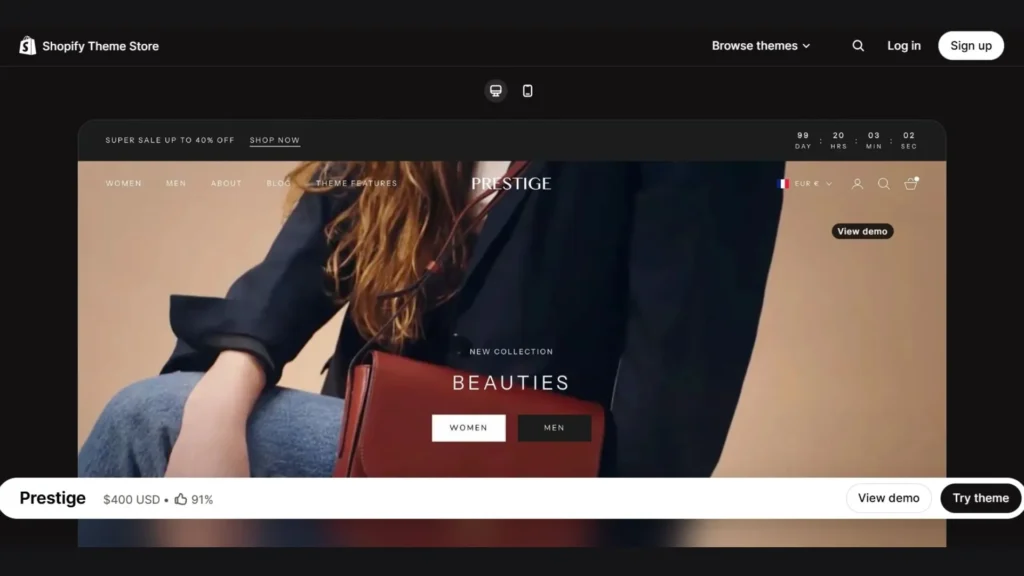
Prestige is one of the strongest options for fashion brands that compete on premium presentation.
The theme is currently listed at $400 on Shopify’s Theme Store and is specifically positioned around high-end brand appeal. It includes 30+ configurable sections and features such as product recommendations, sticky headers, recently viewed products, and swatch filters.
- Best for: Luxury apparel, designer clothing, premium accessories, jewellery, and established D2C brands.
- Consider it if: Your brand identity and visual presentation justify investing in a premium theme.
Its main advantage is the way it gives premium brands room to tell a visual story.
A luxury clothing label can use large editorial imagery, collection storytelling, promotional sections, and carefully structured product pages without making the store feel like a generic catalogue.
Dawn - Best Free Theme for New Fashion Brands
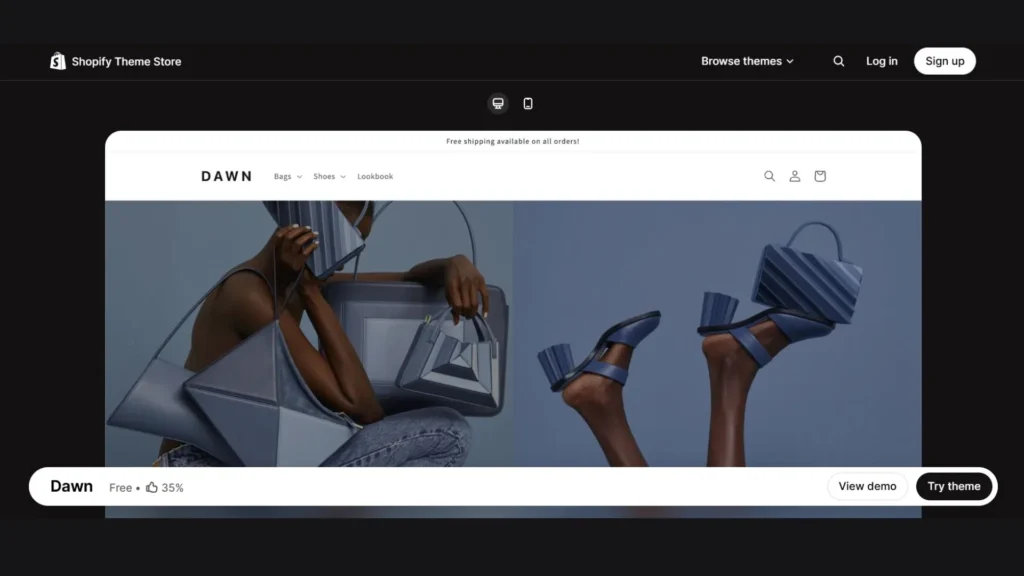
If you are launching a fashion brand with a limited initial budget, Dawn is one of the first themes worth testing.
Dawn is a free Shopify theme designed around large product imagery, minimalist layouts, and flexible customization without requiring code. Shopify describes it as a media-forward theme that puts product images at the centre of the shopping experience.
This makes it particularly useful for fashion businesses with strong photography.
The bigger advantage is financial. You can allocate your initial budget to professional photography, product development, marketing, and website customization instead of spending heavily on a theme.
However, you should not choose Dawn simply because it is free. Test your desired collection layouts, filters, product sections, and mobile experience first.
Best for: Startups, small D2C brands, independent designers, and businesses validating a new fashion concept.
Insights: About 94% of the time, users form their opinion about a website based on its design, and an average user takes only 0.05 seconds to decide how they feel about a website after landing on it.
Fashionopolism - Best for Large Fashion Catalogues
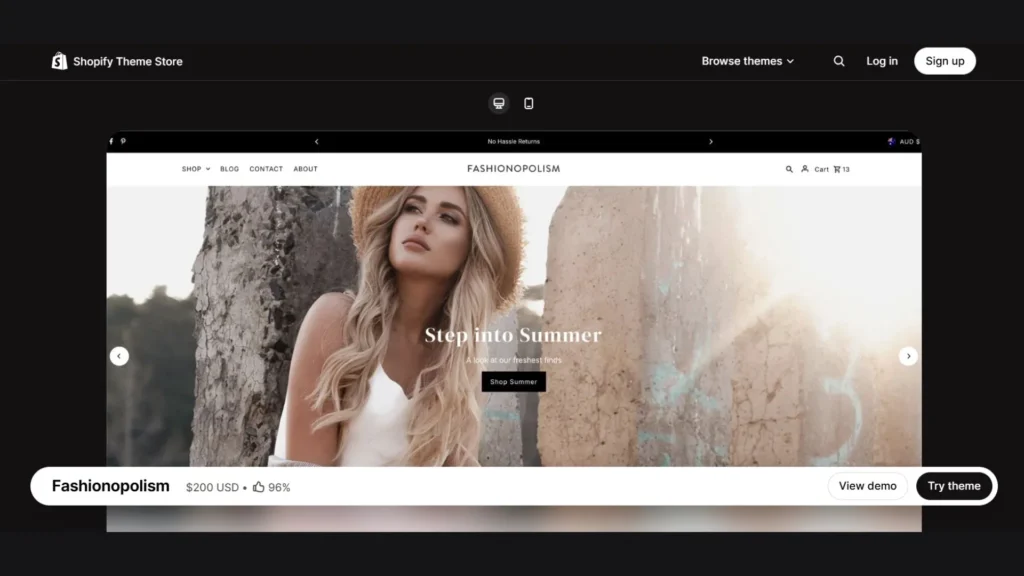
Fashionopolism is specifically relevant to apparel businesses because it is designed to support both smaller and larger inventories.
It currently costs $200 and provides 30+ sections, enhanced search, mega menus, product filtering and sorting, swatch filters, breadcrumbs, quick add-to-cart, quick shop, and complementary product recommendations.
These features address a practical problem for fashion stores: catalogue complexity.
When you have hundreds of products, customers need more than attractive product cards. They need effective navigation, filtering, sorting, and variant selection.
Fashionopolism therefore makes more sense for a growing clothing store than a theme designed primarily around a small editorial catalogue.
Best for: Clothing brands with medium-to-large catalogues, fashion retailers, and stores running frequent collections.
A great-looking theme isn’t enough. Get a fashion website designed to grab attention, make shopping easier, and turn visitors into customers.
Impulse - Best for Promotional Fashion Stores
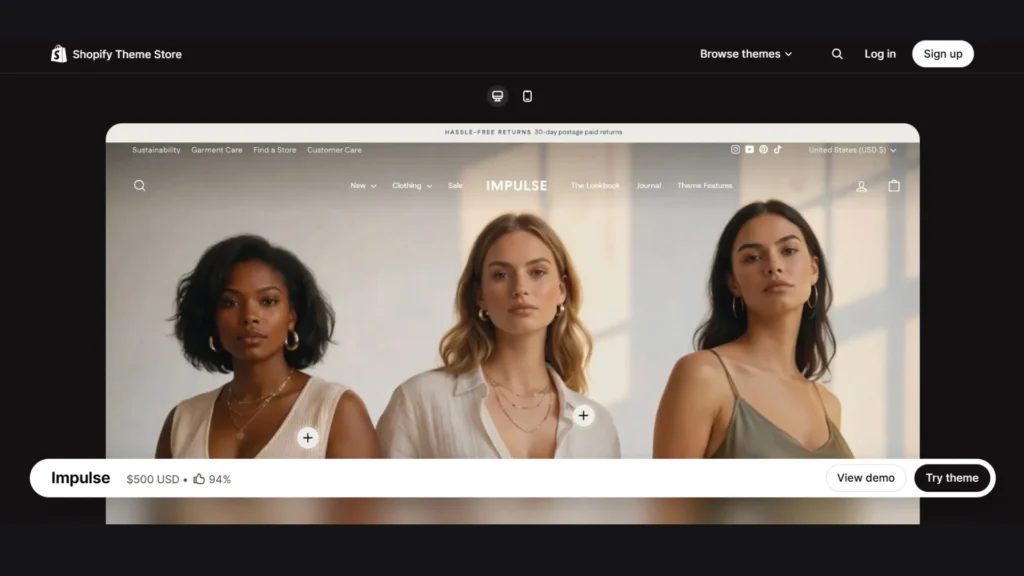
Impulse is a strong option when merchandising and promotions are important parts of your ecommerce strategy. It is currently listed among Shopify’s premium themes at $500.
This type of theme can be useful for fashion businesses that frequently run seasonal collections, discounts, launches, campaigns, and product promotions.
However, do not choose a promotional theme just because you run sales. Too many banners, countdowns, pop-ups, and promotional blocks can make a fashion store feel cluttered.
The better approach is to use promotional functionality selectively.
Best for: Fast-moving fashion brands, seasonal collections, streetwear, and brands running frequent campaigns.
Symmetry - Best for Growing Fashion Stores
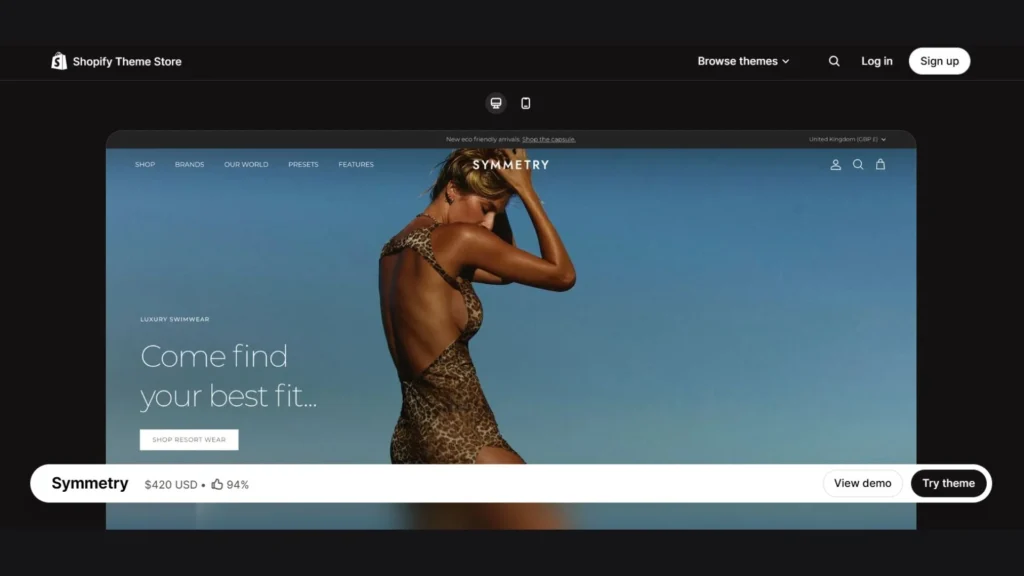
Symmetry is another established option in Shopify’s Theme Store. It is currently listed at $420 and is positioned among Shopify’s premium themes.
It is worth considering when your store needs to balance visual presentation with stronger catalogue navigation.
For growing fashion businesses, this balance matters. A homepage may need editorial content and campaign imagery, while collection pages need practical filters, sorting, and product discovery tools.
Best for: Growing fashion retailers with broader catalogues and multiple collections.
How Should Indian Fashion Brands Choose Between These Themes?
Do not select a theme based only on its demo homepage. Instead, match the theme to your actual business model.
| Fashion Brand Type | Theme to Consider | Main Reason |
|---|---|---|
| New fashion startup | Dawn | Free and visually focused |
| Premium clothing label | Prestige | Luxury-oriented presentation |
| Large clothing catalogue | Fashionopolism | Strong discovery features |
| Promotional D2C brand | Impulse | Campaign and merchandising focus |
| Growing fashion retailer | Symmetry | Balance of design and navigation |
The best shopify themes for fashion brands are therefore different for every business.
A premium saree brand may prioritize editorial storytelling and large imagery. A streetwear brand may need fast collection discovery and promotional merchandising. A footwear store may place greater importance on colour and size filters.
Free vs Premium Shopify Themes: Which Is Better?
Does paying for a premium theme automatically make your store better? No.
A free theme can be the smarter choice when you are validating a business idea or have a relatively simple catalogue.
Premium themes become more attractive when their built-in functionality eliminates the need for several third-party apps or expensive customization.
For example, if a premium theme already provides advanced filtering, quick shop, product recommendations, swatches, and promotional sections, it may reduce the number of additional tools your store requires.
But calculate the total cost.
A ₹0 theme with multiple paid apps can eventually cost more than a premium theme with the functionality you actually need.
Why Theme Performance Matters for Fashion Ecommerce?
Fashion websites are particularly vulnerable to performance problems because they often use large product photographs, videos, animations, reviews, recommendation widgets, and marketing scripts.
Shopify states that mobile devices account for the majority of Shopify storefront traffic and recommends treating mobile performance as a core part of theme performance. It means you should test a theme using your actual content.
A theme may appear fast in its demo because it uses optimized placeholder images. Your real store may become significantly heavier when you add hundreds of product images and third-party apps.
Shopify also recommends testing theme performance and provides benchmark tools for evaluating themes.
What Should You Check Before Buying a Shopify Theme?
Before purchasing one of the available fashion Shopify themes, create a test store and reproduce your actual shopping experience. Check the homepage, collection page, product page, cart, and mobile navigation. Pay particular attention to:
- Product variants: Can customers select sizes and colours quickly?
- Collection pages: Can shoppers filter and sort products without confusion?
- Product images: Can you display enough imagery without creating a slow page?
- Mobile navigation: Can customers reach important categories quickly?
- Customization: Can your team modify sections without hiring a developer for every change?
- Apps: Does the theme already include functionality that you would otherwise need through apps?
- Performance: Does it remain fast after you add your actual images and content?
These checks are more useful than judging a theme from its demo alone.
Insights: A well-designed website can significantly increase engagement, with users spending up to 84% more time on your site, while also driving up to a 132% year-over-year growth in online revenue.
Conclusion
There is no single winner among all shopify themes for fashion brands.
Dawn is the strongest starting point for brands that want to control costs. Prestige suits premium and luxury positioning. Fashionopolism is particularly practical for larger fashion catalogues.
Impulse works well for promotion-heavy stores, while Symmetry is worth considering for growing retailers that need a balance between visual merchandising and product discovery.
The most important decision is not which theme looks best in a demo. It is which theme can support your catalogue, mobile experience, product variants, merchandising strategy, SEO requirements, and future growth without unnecessary customization.
For most Indian fashion startups, starting with Dawn and investing in better product photography, content, and performance can be more sensible than immediately buying an expensive theme.